



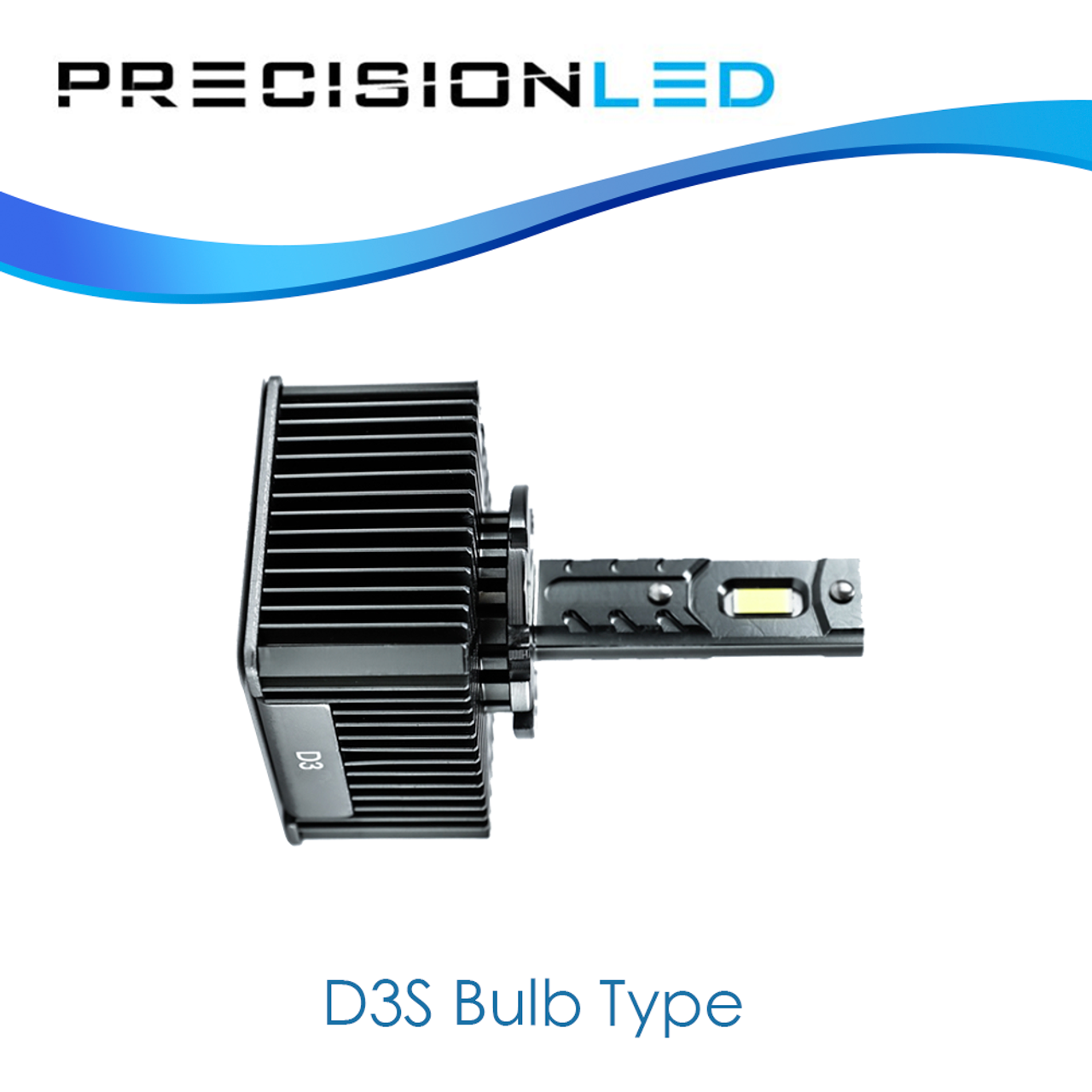


Description
D3S HID to LED Conversion Kit — Kepler Series
Plug-and-play D3S LED bulbs that run off your existing OEM HID ballast. No rewiring. No error cancelers. Just remove, plug in, and drive.
Why Upgrade to Kepler D3S LED Bulbs?
- Up to 200% brighter than stock HID — measured at 15 ft with the SAE J575 standard
- Wider beam dispersion in both projector and reflector HID housings
- Instant-on at full brightness — no warm-up delay, full output from the moment you switch on
- Dramatically cooler operation — 114°F bulb surface temp vs. 380°F for stock HID
- 50,000-hour LED lifespan vs. 24,000 hours for standard HID bulbs
- True plug and play — works with your existing 35W and 55W OEM ballasts, no modifications
What's Included in the D3S LED Conversion Kit
- 1 pair of Kepler D3S LED bulbs
- Zip ties for cable management
- Printed installation guide
How We Test and Measure Our LED Headlight Bulbs
Why Lux Matters More Than Lumens
SAE J575 Standard Measurement Grid
We use a replica of the SAE J575 Headlight Beam Pattern Standard — the same test grid used by OEM automotive manufacturers — with 15 measurement points across the beam pattern taken at a standard distance of 12 feet.
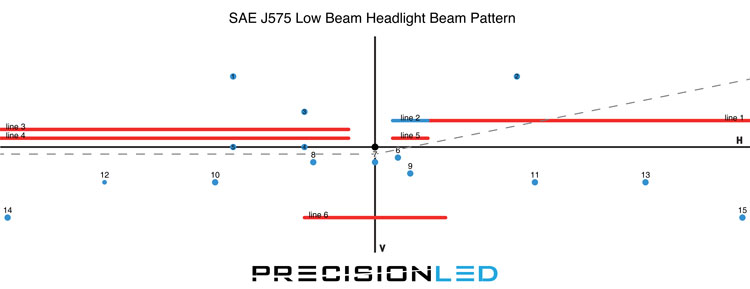
SAE J575 headlight beam pattern — 15 measurement points, 12 ft test distance
- Points 1–3 (high beam zone): Should read near 0 on low beam — measures glare toward oncoming drivers
- Points 4–5 (driver-side cutoff): Steep drop-off = strong cutoff, minimal glare
- Points 6–9 (center output): The brightest zone — uniform readings mean consistent beam shape
- Points 10, 12, 14 (left of center): Strong numbers = wide, uniform spread to the left
- Points 11, 13, 15 (right of center): Strong numbers = wide, uniform spread to the right
What We Measure in the Lab
Every D3S LED bulb is tested across all 15 SAE J575 points for Lux output. We also record voltage, amperage, and total wattage to verify the bulb stays within its rated power draw. Bulbs that overdrive their LEDs run hotter and fail sooner — we reject those.
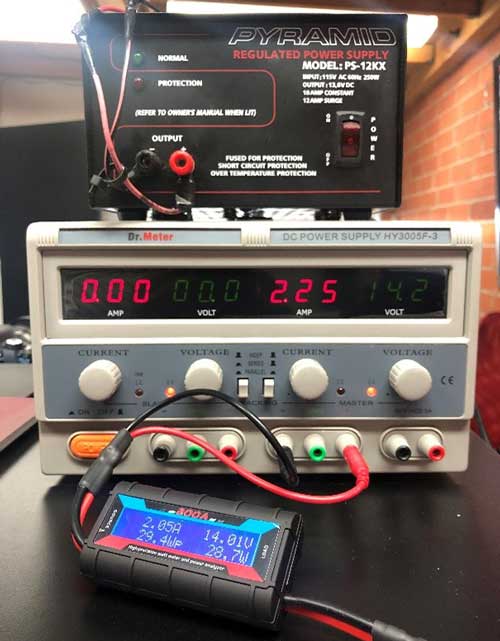
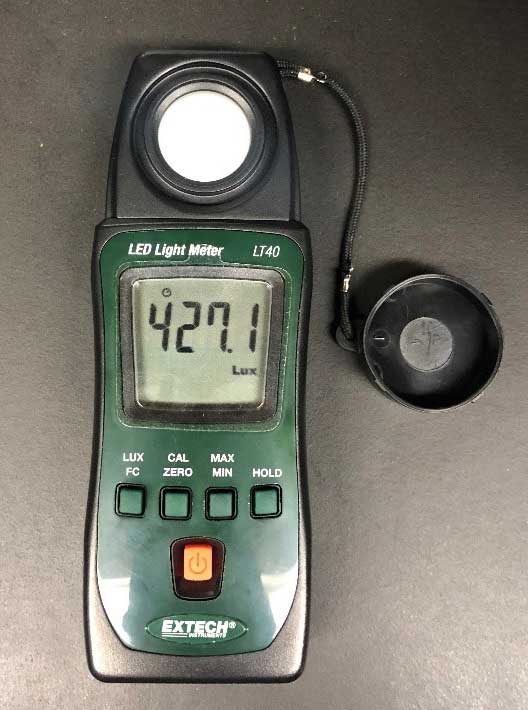
Lab testing: Lux output (left) and power consumption (right) measured for every unit
Temperature Testing — Heat Is the Enemy of LED Lifespan
LEDs degrade faster when they run hot. After 10 minutes of sustained output we measure both the LED chip temperature and the hottest point on the heatsink. The Kepler D3S runs dramatically cooler than the stock HID it replaces — 114°F vs. 380°F.
Kepler D3S vs. Stock HID — Performance Comparison
| Product | Distance | Volts | Amps | Watts | Cooling | Test Duration | Housing Temp | Bulb Temp |
|---|---|---|---|---|---|---|---|---|
| Stock HID | 15 ft | 13.7V | 2.8A | 38.36W | Ambient | 600s | 81°F | 380°F ✗ |
| Kepler D3S LED | 15 ft | 13.73V | 2.85A | 39.13W | Active fan | 600s | 79°F | 114°F ✓ |
Both tested at 15 ft after 10 minutes of sustained output. Lower bulb temperature = longer lifespan + no housing discoloration.
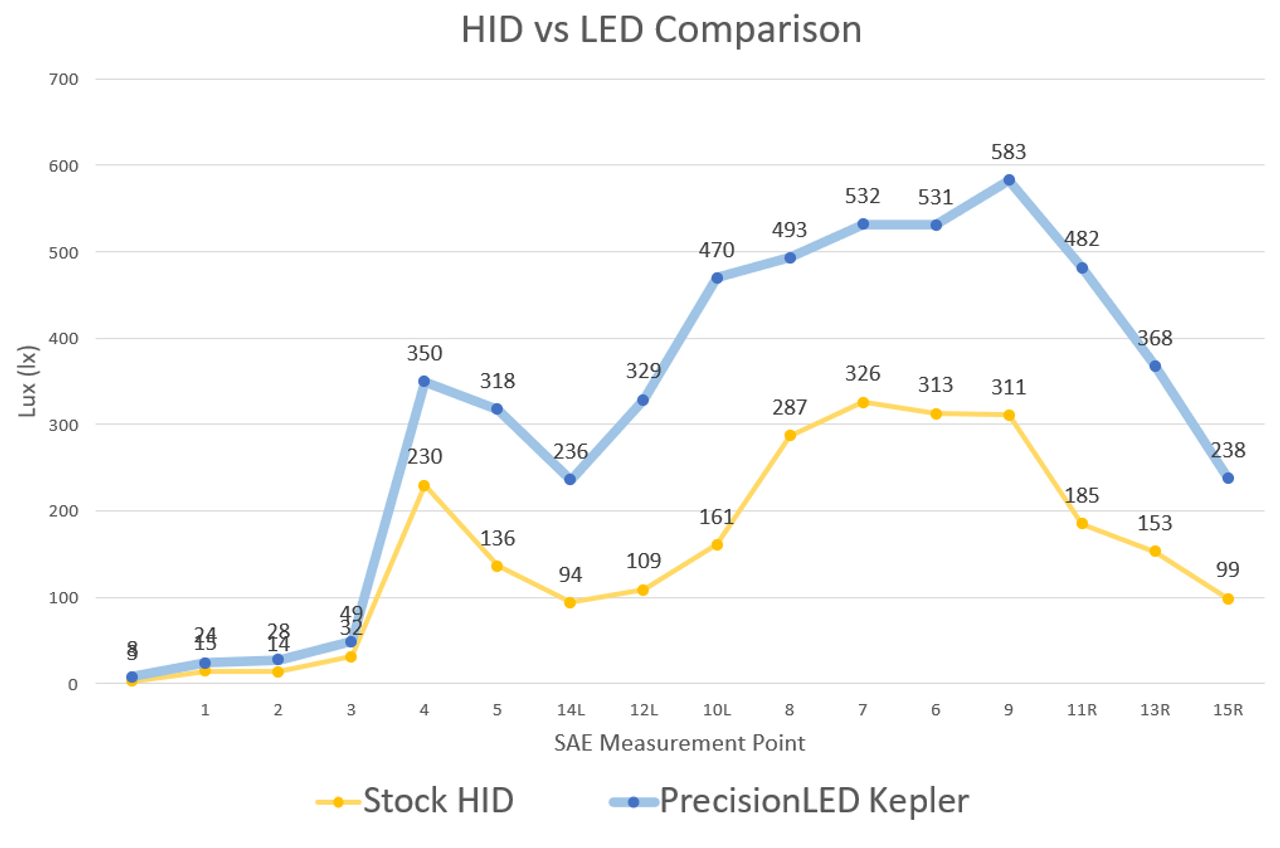
Lux Output Chart: Kepler D3S LED vs. HID — All 15 Beam Points
Center beam points (6–9) show roughly double the lux output over stock HID. The wider field (10L through 15R) also improves substantially — meaning you see further ahead and wider to the sides.
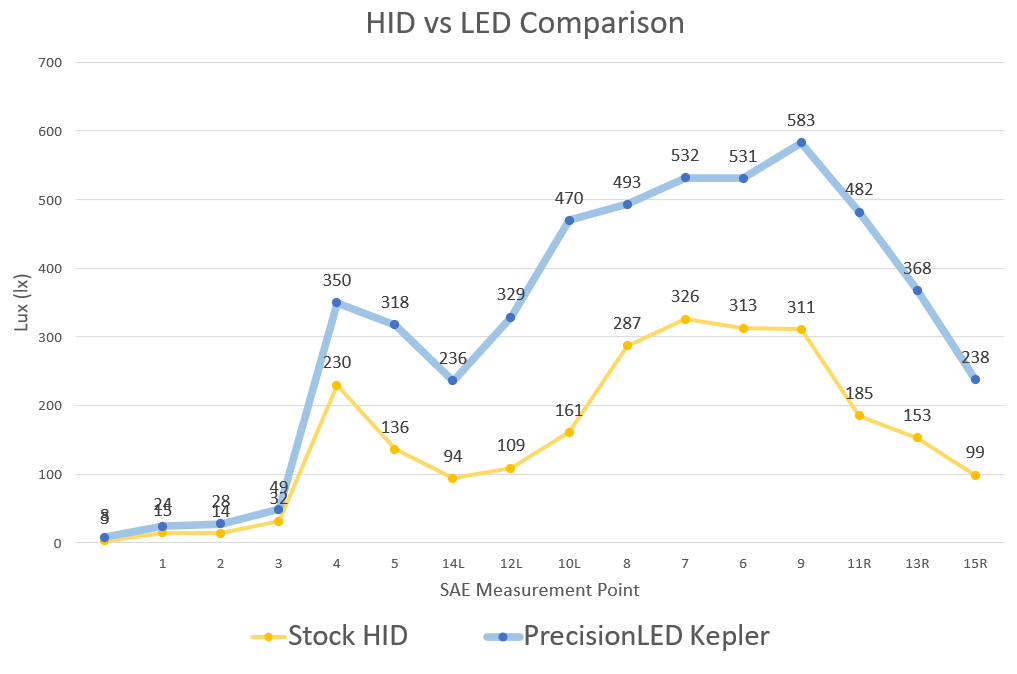
Lux output across all 15 SAE J575 points — Kepler D3S LED vs. stock HID
Side-by-Side: Kepler D3S LED vs. Stock HID
All comparison photos were taken under identical conditions with the same camera settings. The difference is not subtle.
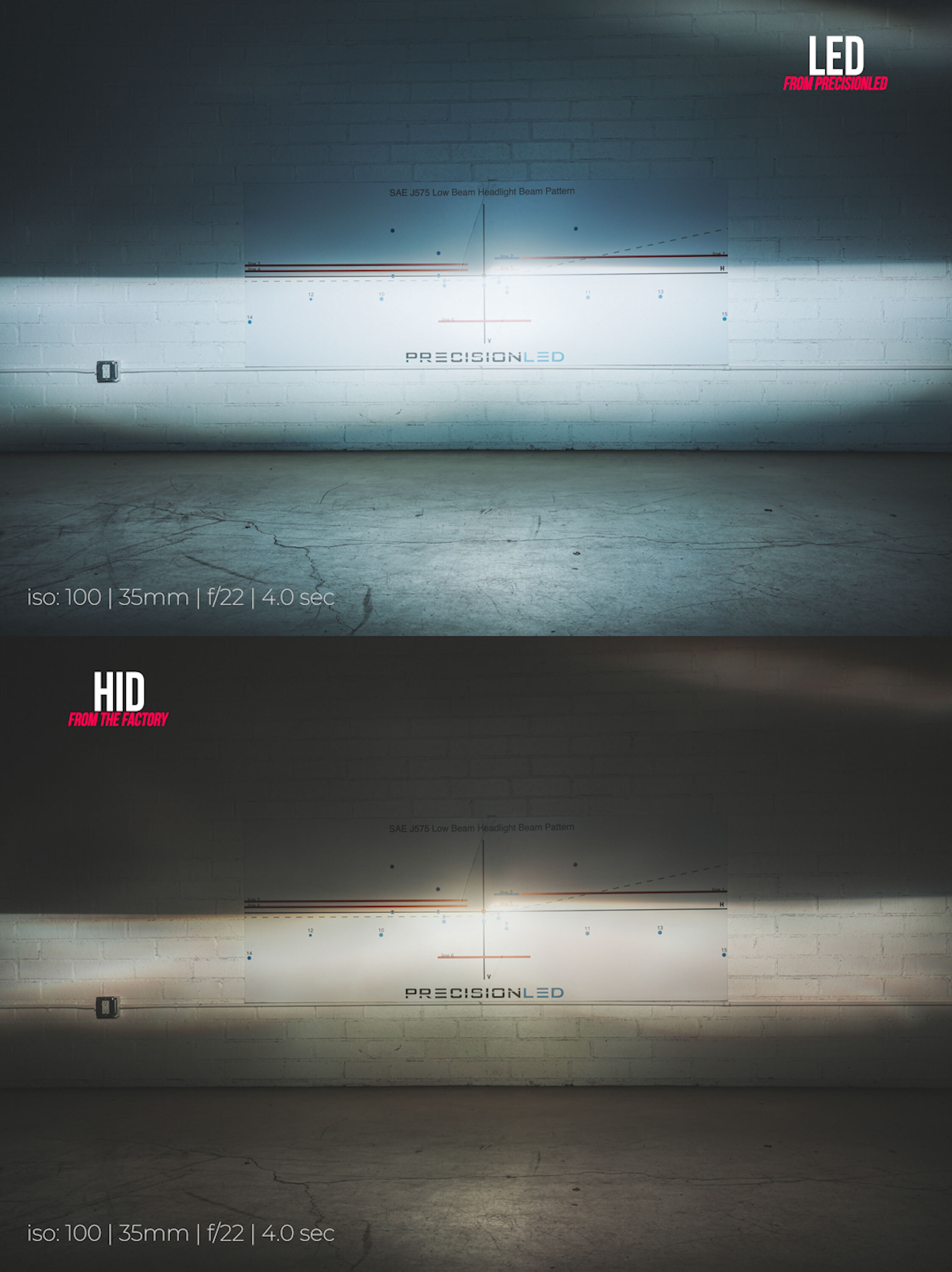
Same camera, same conditions. Left: stock HID. Right: Kepler D3S LED.
D3S LED Conversion — Frequently Asked Questions
Videos
View AllClose
Installation
Need help with your installation? Check out our Database of How To Instructional Videos as well as Documentation on various vehicle makes and models.